
About Us
Most people find their way to See Be Free after they've already tried everything else.
The books. The apps. The programs. Trying harder. You've learned so much, and it still hasn't gotten easier. Helping people bridge that gap between knowing and living is at the heart of Rob Suhoza's work. You don't have to walk this path alone.
Life is the curriculum.
Experience becomes practice.
Wherever you are is a great place to start.
Life is the curriculum. Experience becomes practice. Wherever you are is a great place to start.
How we approach this work
You're not broken, and you're not missing something. Your brain and body are always learning. That's how a habit forms, and it's the same capacity we use to build something new.
So we start with what's here. We get curious about it, make room for it, and let your own awareness, compassion, and ability to choose come forward. Grounded in the current science of how we learn, heal, and flourish.
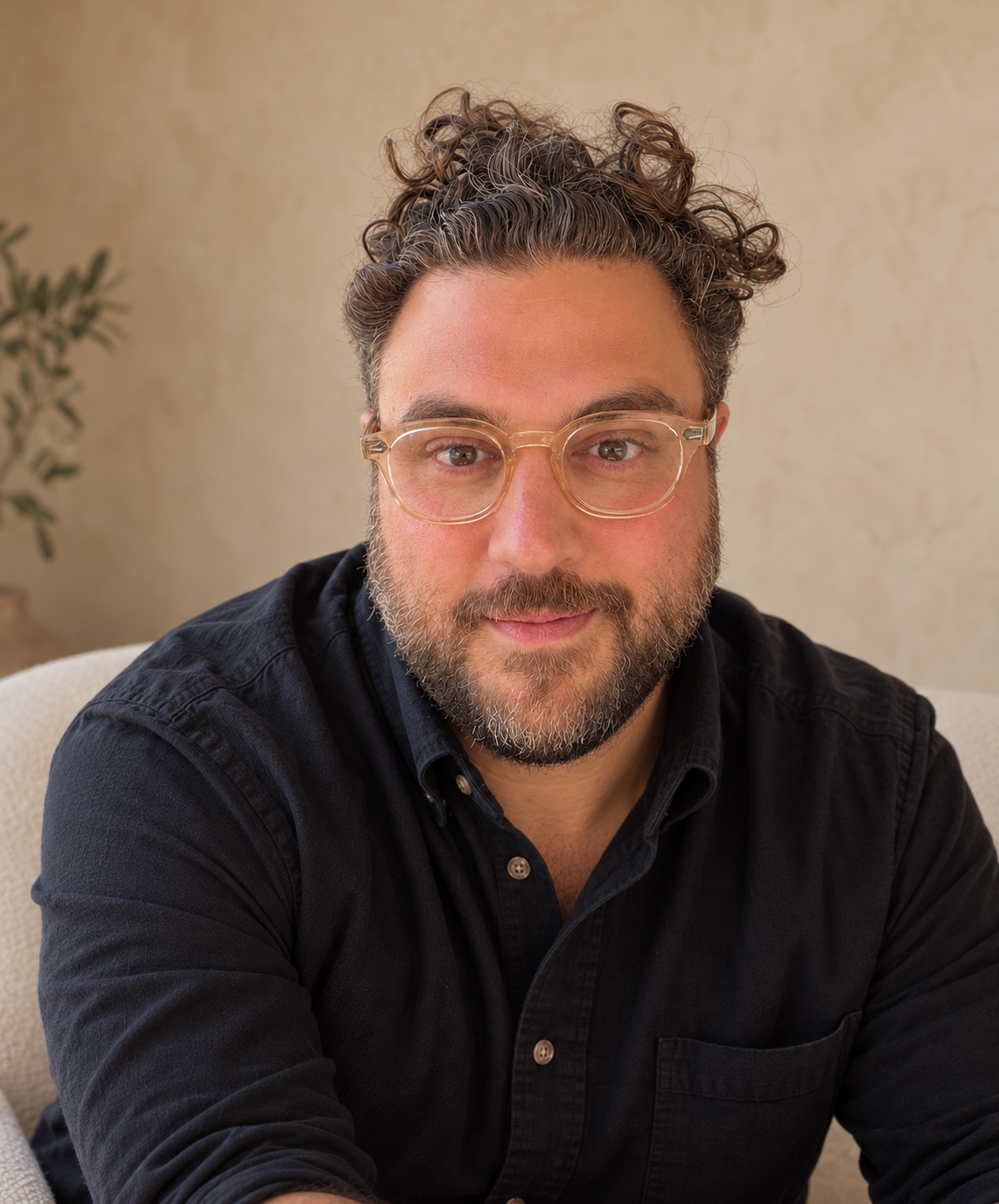
Meet Rob
My path to See Be Free® started because I needed help myself.
For decades, I struggled with anxiety and panic attacks and had a very challenging relationship with food and eating. I was constantly searching for something that would help. I read the books, followed the advice, learned everything I could, and understood what I was "supposed" to do. I had plenty of information. What I didn't have was a way to actually live it.
Things began to change when I learned how to relate to my mind and body differently. I learned to pay attention to what was actually happening instead of constantly fighting it, controlling it, or trying to think my way out of it. And things changed much faster than I expected. Interestingly, I didn't understand why until years later.
When I let go of trying so hard to control everything, I discovered something much more powerful: the human mind and body already have an incredible capacity to learn, heal, and find their way.
But I also didn't do any of this alone. What helped me most wasn't more information. It was the human connection, care, and attention I received from the people who supported me.
Having someone there who could really listen, help me see what I couldn't see, and support me as I figured things out changed everything.
I've spent decades studying and practicing, continuing my own healing while training to help others do the same. Those two things have never really been separate. I'm still learning every day, and what I learn through my own life, my training, the evolving science, and the people I spend time with continually shapes my professional practice in real time.
That's also why I keep my practice small intentionally. I want to know the people I spend this time with and give each person the same kind of care and attention that mattered so much to me.
If any of this feels familiar, let's explore together.
Rob Suhoza
The background behind the work
The credentials support the work. They aren't the work.
-
Helped pioneer the development of the world's first CDC-recognized, mindfulness-based diabetes prevention program.
-
Contributed to the development of award-winning digital therapeutic programs addressing anxiety, eating, smoking cessation, and depression.
-
Collaborated on innovative approaches integrating mindfulness, neuroscience, and evidence-based behavior change.
-
Work and contributions featured in a New York Times bestselling book on anxiety.
-
Extensive, multi-year training and practice in mindfulness and meditation.
-
In-depth study of contemplative psychology, the nature of the mind, and the causes of human suffering.
-
Training in trauma-sensitive mindfulness and approaches that emphasize safety, compassion, and individual experience.
-
Training and experience in yoga, embodied awareness, and mind-body practices.
-
Specialized experience in mindfulness-based habit change, reward-based learning, and the psychology of behavior change.
-
Experience helping people work with anxiety, stress, cravings, emotional eating, and deeply ingrained behavioral patterns.
Rob's work brings together years of professional training and experience developing innovative health and behavior change programs. At the center of it is his own deep and continuing personal practice, which is what keeps the work honest and alive, and it is as much a part of his life today as it has ever been.
His approach emphasizes helping people understand their own minds, recognize the habits that keep them stuck, and discover more helpful and rewarding ways of living.
Through See Be Free®, Rob makes these insights and practices accessible, practical, and directly applicable to everyday life.
The habit loop
Every habit runs on the same quiet loop. See it turning, then try one of your own.
Trigger
Behavior
Result
Hover a word to see what it means.
Something sets it off, often before you notice.
You do the thing, automatically.
What you get out of it. That's what keeps the loop going.
Try one of your own
When wake up feeling anxious happens, I reach for my phone, and I get brief relief but still anxious. Then it starts again.
Seeing the loop is the first step toward freedom.
See Be Free® helps us experience what our habits actually give us, so we can learn from that experience and discover more freedom to choose what's helpful.
See
Wake up to your habits. Notice when they happen, what you expect from them, what they actually give you, and how they affect your life and others.
Be
Learn to stay with your experience, in your body, with mindfulness, kindness, and curiosity. Feel what the habit actually gives you, allowing your brain to learn from direct experience.
Free
As your brain learns that a habit may be less rewarding than expected, its pull can weaken. Discover more freedom to let go and choose what matters to you.
The See Be Free® Promise
Discover a more natural, effective way to change habits through awareness, care, and curiosity.
Grounded in neuroscience and how your brain naturally learns and changes.
Your questions, my answers
-
I'm a National Board Certified Health & Wellness Coach (NBC-HWC), trained through Duke Health & Well-Being, a Certified Mindfulness & Meditation Mentor, and a habit change facilitator with advanced training in Trauma-Sensitive Mindfulness. I'm a coach and guide, not a therapist. See Be Free® isn't therapy or a replacement for mental health treatment. My work can complement the care you receive from therapists, psychiatrists, physicians, dietitians, nutrition professionals, physical therapists, and other members of your healthcare team by helping you bring what you're learning and what's being recommended into everyday life. I'm glad to be one part of a larger circle of care and support.
-
Yes. The See Be Free® approach uses science-supported approaches to help you eat inways that support your larger health goals, whether that's losing weight, gaining muscle,lowering blood pressure, preventing diabetes, or simply feeling healthier and more at easearound food.
Rather than giving you another diet or set of rules, we look at the habits and behaviorsthat can take over your eating and make choices feel automatic. We use awareness,curiosity, and care to help you create more freedom of choice around food, so you can eatmore intentionally and in ways that support the life you want to live.
Your goals may come from you, your physician, dietitian, or another member of your careteam. My role isn't to replace their medical or nutritional guidance. It's to help you withthe behavior of actually living it.
The goal is less fighting with food and yourself, more freedom of choice, and a way ofeating that supports your health while still allowing you to enjoy food and your life.
-
Mindfulness helps us become aware. And awareness is where change starts. Your brain learns from experience. It keeps track of what a behavior actually feels like andwhat you actually get from it. That's how it decides whether to do it again. But when a habit runs on autopilot, your brain isn't getting clear information. It's workingfrom an old memory of what the habit used to give you.
Mindfulness lets you see what's really happening while it's happening. What the urgefeels like. What the behavior gives you. What it costs. How you feel afterward. When your brain gets that clearer picture, it can update. What isn't actually helping startsto lose its pull. What does help becomes easier to choose. You don't have to force it. You just have to see it clearly.
-
Not at all. No special terminology, no belief system required. Part of what I do is translate these ideas into something practical and human.
-
Yes. Sessions happen over video, so you can work with me from wherever you are.
-
No. Meditation and mindfulness can be powerful ways to strengthen awareness, and ifyou want to begin or deepen a practice, that can absolutely be part of our time together.But you don't need to meditate to benefit from See Be Free®. What we're really strengthening is awareness. Our brains learn from experience, includingwhat we actually get from the things we do. The more clearly we can experience ourbehaviors and their results, the more our brains have an opportunity to learn. Meditation is one way to practice that. But so is paying attention while eating, walking, worrying, scrolling, talking with someone, or simply moving through your day. We're not trying to make you a master meditator. We're strengthening your ability to beaware of your life while you're living it.
-
That's something I hear all the time.
Habits can feel like an invisible force making choices for us before we even realize what'shappening. See Be Free® starts by making the invisible visible. We strengthen awareness so you can see your habits, experience what they're actuallydoing for you, and give your brain the information it needs to learn. Over time, what oncefelt automatic can become a choice, with less force and struggle.
And we do that together, with curiosity, care, and another human being paying close attention.
-
Worry, rumination, health anxiety, panic and avoidance. Overeating, binge eating, eatinglate at night, and cravings. Scrolling, phone use, procrastination, gambling, pornography,shopping, checking, controlling, and other habits of distraction or escape.
These patterns often intersect. Fear, uncertainty, stress, discomfort, or pain can triggerhabits meant to give us relief, distraction, certainty, or control. Anxiety can influence howwe eat. A difficult feeling can send us to our phones. Worry can lead to more thinking, checking, controlling, or avoiding. Everyone is different. You don't have to fit yourself into a mold or a predetermined program. We get curious about your mind, your body, your habits, and your life, and meetwhat we find with warmth, friendliness, and care.
-
You may notice small shifts right away, with more noticeable change developing overweeks and months. Many things can influence how quickly that happens. The good news is you don't have to force it. We strengthen awareness by bringing somecuriosity and kindness to what you're already doing. As your brain gets clearerinformation about what's actually rewarding and what isn't, more helpful choices canbecome easier and less helpful habits can begin to lose their pull.
-
Let's explore together. Start Here.